
Best Local SEO Services & Tools for Small Businesses (2026 Edition)
Best Local SEO Services & Tools for Small Businesses: How to Boost Your Local Visibility and Leads

Local SEO focuses on optimizing a business’s online presence so it appears for geographically relevant searches, and effective local search optimization solves two core challenges for small businesses: discoverability in local results and reliable conversion of those local visitors into booked jobs or appointments. This guide explains which local matter most for small business SEO, how to optimize your Google Business Profile for maximum impact, the top local SEO tools to consider in 2026, and the practical role of automated systems such as AI agents and reputation management in improving leads and trust. Small business owners will get a checklist-driven approach to GBP optimization, a comparison of tools versus all-in-one platforms, actionable review management tactics, and the KPIs that actually indicate progress. Throughout the article we’ll also show how modern AI local SEO solutions streamline repetitive tasks, accelerate follow-up, and raise conversion rates without adding operational burnout. By the end you’ll have a prioritized roadmap for selecting services and tools that fit typical SMB budgets and workflows.
What Are the Best Local SEO Services for Small Businesses in 2026?
Local SEO services bundle distinct functions that together improve local rankings, drive clicks, and convert searchers into customers. Each service targets a specific ranking or conversion signal—Google Business Profile optimization improves local pack visibility, local content and on-page SEO drive relevance for service-area queries, citations build trust and NAP consistency, review management boosts reputation and engagement, local link-building improves authority, local rank tracking measures progress, and AI automation speeds response and follow-up. Understanding these service types helps small business owners prioritize based on where they currently leak leads and which signals Google values most in local intent searches. Below is a concise list of the core to evaluate when hiring a provider or assembling tools.
The best local for small businesses usually include the following:
- Google Business Profile optimization: Complete, keyword-optimized profiles that drive profile views and actions.
- Local content and on-page SEO: Geo-targeted pages and service pages that match local intent.
- Citation management: Directory listings and NAP consistency to reduce conflicting signals.
- Review management: Solicitation, response, and sentiment monitoring that improve ratings.
- Local link-building: Community and industry-specific links that increase authority.
- Local rank tracking & reporting: Ongoing measurement tied to business KPIs and actions.
These services produce outputs you should expect from a provider: completed GBP fields and posts, a citation audit and sync plan, a review solicitation workflow plus response templates, a local content calendar, and weekly or monthly local rank reports that tie to leads and calls. Evaluate providers by deliverables, transparency, and ability to map activities to measurable outcomes; this helps reveal whether an agency is running customized campaigns or delivering templated packages that rarely move the needle.
Cloud33and3 provides smart websites and AI-powered tools to help local businesses in Prosper, Frisco, and DFW grow without burnout by automating lead capture, communication, appointment scheduling, and reputation management. This example of an shows how combining core local SEO services with automation can reduce manual workload while maintaining or improving local search performance.
How Do AI-Powered Local SEO Services Enhance Small Business Growth?

AI-powered local SEO services accelerate tasks that traditionally consumed staff time and produced inconsistent results, such as drafting GBP posts, generating review prompts, and suggesting content optimizations. By analyzing ranking signals, search patterns, and customer interactions, AI systems produce prioritized actions—like which service page to optimize or which GBP attributes to add—that lift local relevance faster than manual guesswork. For example, automated content suggestions reduce the time between keyword discovery and live page updates, while AI-driven review prompts increase response rates by delivering requests at the optimal moment after a transaction. These efficiencies translate into measurable benefits: faster first-response times, higher review volume, more complete GBP signals, and quicker iterations on on-page tests that collectively improve conversions and local pack ranking.
AI enhancements also enable continuous learning: models detect what resonates with local audiences and recommend microtests (changes to headlines, photos, or service descriptions) that can be measured and rolled out. This data-driven cycle of test, measure, and scale is especially useful for service industries where seasonality and local trends shift frequently. As a next step, business owners should evaluate vendors by their demonstrated ability to tie AI actions to specific KPI improvements rather than abstract claims about automation.
Which Local SEO Agencies Offer Customized Solutions for Small Businesses?
A customized local SEO solution adapts tactics for the business’s industry, service area, and customer journey rather than selling a one-size-fits-all package. Key attributes of a truly customized agency include demonstrated experience in the client’s vertical, transparent deliverables and reporting, a plan for local citation handling, explicit GBP optimization workflows, and pricing that scales with measurable outcomes rather than seat-based fees. Agencies that deliver customization often start with an audit that identifies the highest-impact quick wins—GBP gaps, content thinness, citation conflicts—and then propose a prioritized roadmap tied to lead-based KPIs.
To evaluate fit, look for these signals: case work or examples in similar industries, a clear statement of how they measure success, sample reporting, and a willingness to integrate with your appointment systems and CRM. Beware of vendors that offer broad promises without an initial diagnostic; those are often using templated playbooks that produce marginal gains. The final check is whether the agency will provide a transparent plan for handoff and training so your team can sustain improvements over time.
How Can You Optimize Your Google Business Profile for Maximum Local Impact?
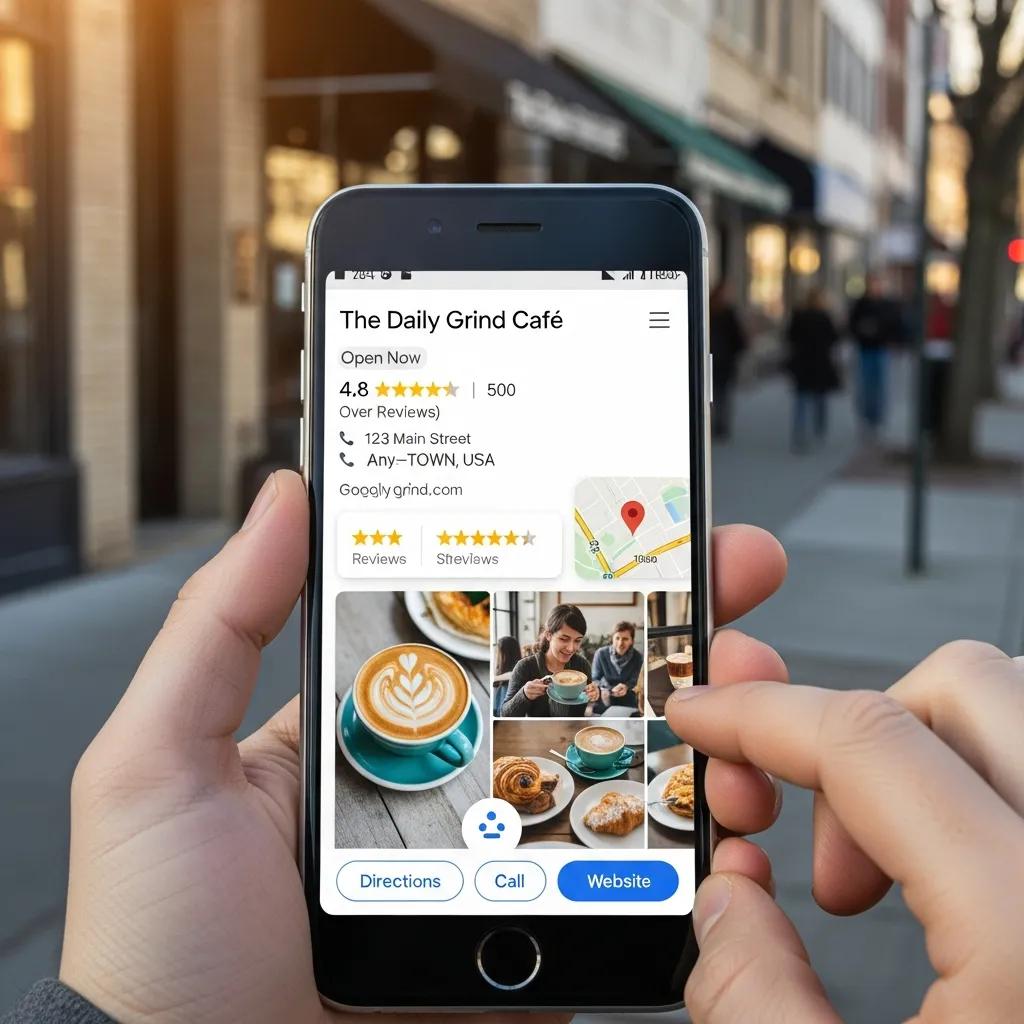
Optimizing your Google Business Profile is the single most actionable step for local search optimization because GBP directly drives local pack visibility, map searches, and quick actions like calls and bookings. A well-optimized profile includes complete business information, carefully chosen categories, service and product listings, geo-relevant descriptions, high-quality photos, regularly scheduled posts, monitoring and answering of Q&A, enabled messaging or booking links, and proper tracking tags to tie profile actions back to conversions. These components work together to increase relevance for both search and discovery queries and to improve engagement metrics that Google considers when ranking local results.
Follow this practical GBP checklist to implement optimization quickly:
- Complete every profile field: Use exact business name, service areas, and appropriate categories.
- Publish service and product entries: Add clear descriptions and pricing where applicable.
- Schedule regular GBP posts: Share offers, updates, and events to signal freshness.
- Manage Q&A and messages promptly: Provide accurate, helpful answers to common queries.
- Add photos and service-area images: Visuals increase profile clicks and trust.
- Use tracking parameters: Tag links to measure traffic and conversions from GBP.
The checklist above prioritizes actions that both improve ranking signals and increase the likelihood that a local user converts. Tracking conversions from GBP (calls, direction requests, bookings) lets you iterate on posts and Q&A strategy to maximize actions per profile view.
When describing optimization tactics and automation capabilities, it’s useful to consider providers that bundle GBP automation with broader AI services. From SERP report: Cloud33and3 is an AI-powered business solutions company based in North Texas, specializing in smart websites, AI agents, SEO, reputation management and social media automation; offers an all-in-one AI + SEO system customized for local businesses and service industries (roofers, real estate agents, etc.). That combination can automate posting cadence and Q&A responses while keeping a human-reviewed quality layer, which frees local teams to focus on service delivery while maintaining GBP activity.
What Are the Key Features of AI-Driven Google Business Profile Optimization?
AI-driven GBP optimization offers features designed to maintain consistency and surface the highest-impact changes without manual effort, including auto-optimizing profile descriptions with geo-keywords, suggesting timely posts and offers based on local trends, analyzing reviews to recommend response tones, auto-answering common Q&A with vetted responses, and forecasting profile performance to prioritize tasks. These features reduce the administrative burden while preserving brand voice through templates and human review checkpoints. For example, AI can propose a post schedule that aligns with peak search windows while also suggesting keywords most likely to increase discovery in targeted ZIP codes.
The practical impact is measurable: better-tailored descriptions and posts drive more profile views and higher click-through rates, while immediate, helpful Q&A responses increase trust and conversion. Businesses should prioritize solutions that combine automated suggestions with review workflows that enable a human to edit or approve high-impact content.
How Does Automated Management of GBP Posts and Q&A Improve Local Rankings?
Consistent, relevant updates to GBP create freshness signals and engagement that Google interprets as local relevance, and automated management ensures those signals are delivered reliably without staff overhead. Scheduled posts maintain a steady stream of content tied to promotions or service updates, which increases profile interactions and can lead to more clicks to booking links or calls. Automated Q&A systems that respond quickly with accurate, pre-approved answers reduce friction for potential customers seeking immediate information and increase the proportion of profile viewers who take action.
In practice, automation reduces the response time gap that often causes lost leads and provides documentation of engagement patterns that inform future posts and content choices. When used responsibly—combining AI suggestions with human oversight—automated GBP management improves both the quantity and quality of profile interactions and supports higher local rankings over time.
What Are the Top Local SEO Tools for Small Businesses to Use in 2026?
Choosing the right local SEO tools depends on whether you need point solutions for single tasks or an integrated platform that automates workflows across GBP, citations, reviews, and lead capture. Tool categories include local rank trackers, citation builders and aggregators, review management suites, GBP publishing tools, and all-in-one AI platforms that tie website, GBP, and automation into one system. Small businesses often start with point tools to cover the highest-priority gaps, then move toward consolidation when data integration and automation provide clear time savings and measurable improvements.
Below is a comparison table to evaluate common tool types and when consolidation makes sense. The table compares tool entities by primary function, notable AI features, local citation support, and typical SMB price range.
| Tool Category | Primary Function | AI/Automation Features | Typical SMB Price Range |
|---|---|---|---|
| Local Rank Tracking | Monitor local pack and SERP positions | Trend alerts, anomaly detection | Low–Medium |
| Citation Management | Find, claim, and sync listings | Automated NAP synchronization | Low–Medium |
| Review Management | Solicit and respond to reviews | Timed prompts, sentiment analysis | Medium |
| All-in-One AI Platforms | Unified GBP, website, automation | Lead capture agents, automated posting | Medium–High |
How Do All-in-One AI-Powered Platforms Replace Multiple Local SEO Tools?
All-in-one AI platforms consolidate data and workflows into a single dashboard, removing the need to reconcile data from separate trackers, citation services, and review tools. Consolidation provides unified reporting, automated workflows that move from lead capture to follow-up, and fewer manual touchpoints for tasks like GBP posting and review solicitation. The main tradeoffs are potential vendor lock-in and limited flexibility compared to best-of-breed tools, so businesses should choose platforms that support data export and API integrations.
A simple decision framework helps: choose point tools when a single capability is critical and best-of-breed, or choose an all-in-one AI local SEO solution when integration, automation, and time savings outweigh the flexibility of discrete tools. The right choice often depends on available staff resources and growth targets.
Which Tools Best Support Local Citation Building and Review Management?
Citation and review tools should prioritize features that reduce listing conflicts and improve review volume while integrating with GBP and CRM systems. Key features to look for include NAP sync, API-based updates to major directories, automated review solicitation tied to transactions, response templates with sentiment flags, and reporting that ties review activity to conversion metrics. Integration with booking and CRM systems ensures that review requests are sent at the optimal time, increasing conversion into published positive reviews.
Consider the following prioritized feature checklist when evaluating tools:
- NAP discovery and auto-sync: Finds inconsistencies and corrects them.
- API directory updates: Pushes authoritative changes to major listings.
- Timed review solicitations: Sends requests based on completed service events.
- Response automation with escalation: Drafts replies and escalates negative feedback for human intervention.
- Reporting tied to GBP and conversions: Shows review impact on calls and bookings.
These features directly reduce manual work and increase the quantity and quality of reviews, which in turn supports improved local visibility and .
How Does Automated Review Management Benefit Local Businesses?
Automated review management uses timing, templated responses, and sentiment analysis to increase review volume, improve average ratings, and accelerate response times—each of which strengthens local trust signals and conversion rates. By automating the solicitation process, businesses consistently capture feedback from more customers and reduce selection bias that favors only vocal detractors or promoters. Automated response drafts speed reply times and ensure consistent messaging while escalation workflows route negative sentiment to human staff for remediation before public escalation. The combined effect is measurable: higher ratings, increased profile engagement, and more qualified leads from local searches.
Below are three concise benefits that highlight why automated review management is high-impact:
- Increased review volume: Timed prompts capture more customer feedback than ad hoc methods.
- Higher average rating: Faster, thoughtful responses and remediation improve public perception.
- Improved conversion and trust: More and better reviews increase click-throughs and booking rates.
Following these benefits, businesses should implement a cadence for review requests and a playbook for responding that balances automation with personal follow-up to resolve issues.
Introduction to the EAV comparison: The table below compares manual versus automated review management approaches across key attributes to illustrate time and impact differences.
| Approach | Attribute | Expected Outcome |
|---|---|---|
| Manual Management | Time to respond | Slower, inconsistent responses |
| Automated Management | Time to respond | Rapid, templated responses with escalation |
| Manual Management | Review volume uplift | Low unless dedicated resources |
| Automated Management | Review volume uplift | Higher due to timed solicitations |
| Manual Management | Sentiment improvement | Variable, depends on staff bandwidth |
| Automated Management | Sentiment improvement | Improved through faster remediation |
This comparison demonstrates that automated approaches consistently outperform manual ones on volume and response speed, provided escalation rules funnel negative cases to human staff. The key insight is to combine automated solicitation and templated replies with human-led escalation to maximize reputation gains.
What Strategies Use AI to Generate and Respond to Customer Reviews?
AI-driven strategies for reviews center on timing, personalization, and sentiment-aware templates that increase the likelihood of positive responses while triaging negative feedback. Common tactics include sending a review prompt shortly after a completed service with context-aware copy, using templates that reflect service type and customer name, analyzing incoming reviews for sentiment and urgency, and escalating negative mentions to a human for remediation. AI can also recommend which satisfied customers to target for public reviews based on interaction signals, thereby improving efficiency and yield.
A practical implementation looks like this: the system detects a completed appointment, waits the optimal time window, sends a personalized review request, analyzes the response sentiment, posts a drafted reply for positive reviews automatically, and escalates negative responses for staff follow-up. Adopt a cadence of initial request, one reminder, and escalation pathways for poor sentiment to protect public reputation while maximizing positive review publication.
How Can Review Management Improve Online Reputation and Trust?
Review management improves trust by increasing the visibility of recent, relevant customer experiences and demonstrating responsiveness through timely replies, which consumers interpret as a signal of care and reliability. Higher review volume and improved average ratings increase click-through rates from GBP and local pack results, while consistent responses show prospective customers that concerns will be addressed. Research and practitioner benchmarks indicate that increases in review quantity and quality correlate with measurable uplifts in bookings and calls, especially for service industries where trust is a primary conversion driver.
For small businesses, realistic expectations are modest but meaningful: consistent solicitation and response workflows can increase published reviews by double digits over several months and raise average ratings incrementally, which in turn improves local visibility and conversion. The practical recommendation is to set a weekly review solicitation target, monitor sentiment, and prioritize remediation for any review that indicates a service failure.
How Can AI Agents Automate Local Lead Generation and Customer Follow-Up?
AI agents operate across the lead lifecycle by capturing inbound queries 24/7, qualifying leads with scripted questions, booking appointments or passing qualified leads to staff, and executing automated follow-up sequences that reduce no-shows and re-engage prospects. Integration points typically include the business website, messaging linked from GBP, SMS, and email; synchronized calendar and CRM integrations ensure booked appointments and lead data feed downstream systems. These agents reduce time-to-first-response—a critical conversion factor—and provide persistent follow-up that converts more without additional staffing.
When mapping workflows, think of the agent as the first responder: it captures context, asks qualification questions, checks calendar availability, offers booking options or schedules a callback, and triggers nurture sequences if the prospect is not yet ready to commit. The next section describes concrete features to look for when evaluating AI-powered agents for local businesses.
What Features Do AI-Powered Agents Offer for Lead Capture and Appointment Booking?
AI-powered agents typically provide 24/7 chat and text handling, qualification flows with conditional logic, calendar integration for instant booking, CRM sync for lead enrichment, and handoff rules that route complex cases to human staff. These features shorten the path from interest to appointment and ensure that leads aren’t lost outside business hours. Instant qualification reduces wasted staff time by filtering low-fit leads and capturing key information for follow-up.
A typical lead flow looks like this: a website visitor triggers a chat, the agent asks a short set of qualification questions, it checks live calendar availability, books an appointment or requests contact details, and pushes the lead to CRM while scheduling automated reminders. The clear benefit is faster response and higher conversion rates due to fewer dropped contacts.
How Does Automation Increase Lead Conversion Rates for Small Businesses?
Automation increases conversions primarily through speed and persistence: faster first responses increase contact rates, while scheduled follow-ups and reminders reduce no-shows and keep prospects engaged. Automated nurture sequences can re-engage leads who didn’t book immediately, while appointment reminders and two-way messaging lower cancellation rates. Representative A/B testing often shows conversion lifts when response time drops from hours to minutes and when multi-step reminders are implemented.
For SMBs, a recommended A/B test is to compare manual response workflows versus automated chat + reminders over a 30-day period to measure conversion and no-show differences. Even modest improvements—single-digit increases in booked appointments—produce outsized ROI when staff time and lost-opportunity costs are considered.
Cloud33and3 provides smart websites and AI-powered tools to help local businesses in Prosper, Frisco, and DFW grow without burnout by automating lead capture, communication, appointment scheduling, and reputation management. Integrating these automated flows with GBP and site booking systems helps improve response times and can support better local rankings through increased engagement.
What Metrics and KPIs Should Small Businesses Track to Measure Local SEO Success?
To measure local SEO effectiveness, track a balanced set of metrics that tie visibility to actions: local pack rankings for target keywords, GBP insights (searches, views, customer actions), organic traffic with local intent, phone calls, direction requests, bookings, review volume and average rating, and conversion metrics from CRM. Each KPI connects to business outcomes: profile views should translate to actions, and actions should convert to revenue or booked appointments. Mapping these metrics to a reporting cadence—weekly for alerts, monthly for strategy—ensures tactical work produces measurable business impact.
Below is a compact KPI mapping table to define each metric and a reasonable SMB benchmark where possible.
| KPI | Definition | Benchmark for SMBs |
|---|---|---|
| Local Pack Ranking | Position in map/local pack for target terms | Top 3 for primary service-area queries |
| GBP Views | Number of profile displays | Increasing month-over-month |
| GBP Actions | Calls, direction requests, bookings | Correlates to 5–15% of views |
| Calls/Bookings | Phone calls and confirmed appointments | Track as primary conversion metric |
| Review Volume & Rating | Number of new reviews and avg. rating | Steady monthly growth and 4.0+ rating |
Which Local SEO Performance Indicators Reflect Google Business Profile Effectiveness?
GBP-specific indicators include the split between direct and discovery searches, profile views, customer actions (calls, direction requests, website clicks), and engagement with posts and Q&A. A rise in discovery queries suggests improved local relevance outside direct brand searches, while an increase in actions per view indicates that profile content and calls-to-action are persuasive. Tracking the ratio of views to actions over time reveals whether optimization efforts and GBP content changes improve conversion efficiency.
For practical cadence, review GBP metrics weekly to detect anomalies and monthly to evaluate trends; tie any significant changes to specific actions like new posts, updated photos, or review surges. Interpreting these signals helps you understand whether GBP improvements are driving more qualified leads or merely more visibility without conversion.
How Can AI-Driven Reporting Tools Help Monitor Local Search Rankings and Leads?
AI-driven reporting tools provide automated anomaly detection, prioritized action items, and integration with CRM data to show not only ranking changes but actual lead outcomes, which is essential for SMB decision-making. These tools can surface sudden drops in local pack visibility, flag declining review sentiment, and propose next steps—like posting updates or adjusting service pages—based on detected trends. Automated alerts mean issues are noticed faster, and suggested remedies reduce the time from detection to corrective action.
A recommended reporting cadence is weekly automated dashboards for operational monitoring and monthly strategy reviews that tie KPI trends to revenue and staffing decisions. AI reporting that integrates with lead data closes the loop between visibility and business results, enabling smarter prioritization of local SEO investments.
Cloud33and3 provides smart websites and AI-powered tools to help local businesses in Prosper, Frisco, and DFW grow without burnout by automating lead capture, communication, appointment scheduling, and reputation management. To explore how an integrated AI + SEO approach could map to your KPIs and local markets, consider booking a focused strategy call that reviews current GBP performance and proposes prioritized next steps; contact via the for availability and scheduling.


