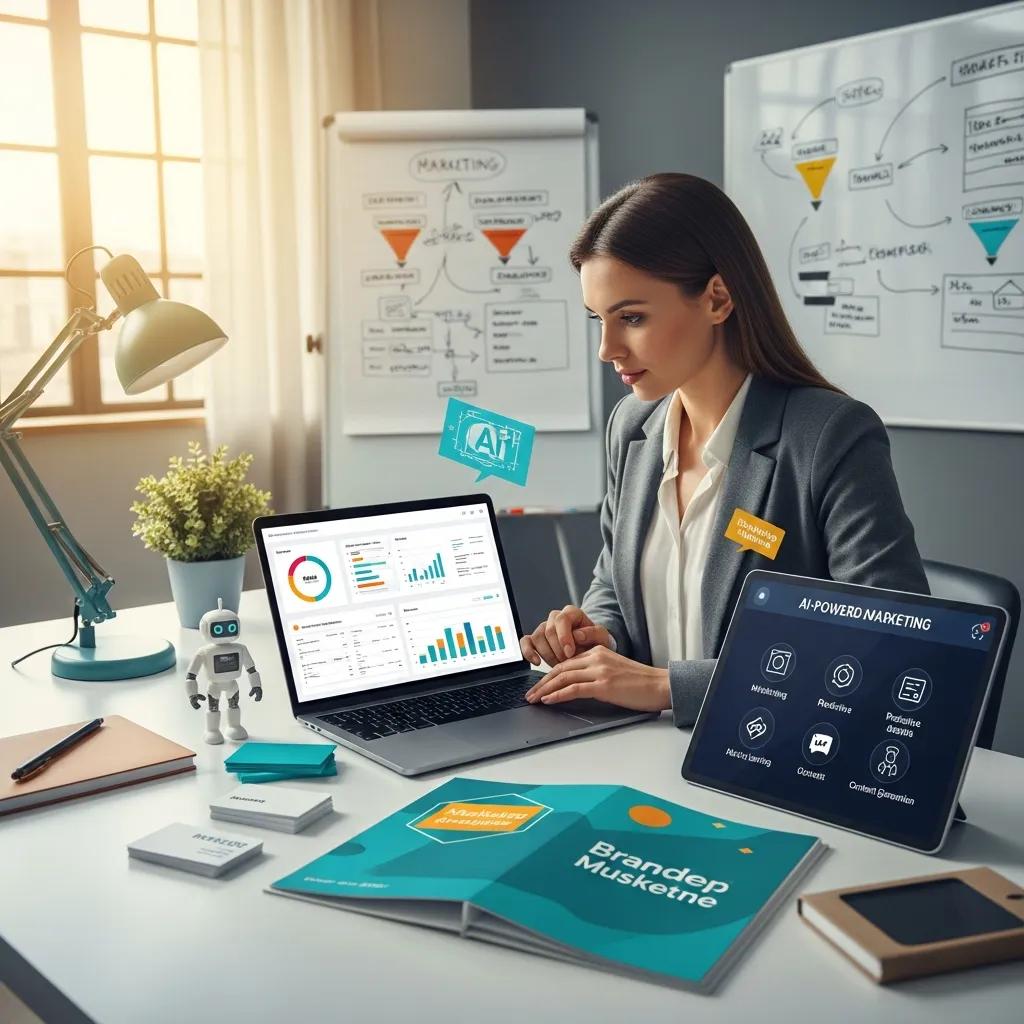
Boost Small Business Growth with an AI Marketing Strategy
Discover AI Marketing Solutions
Mastering Digital Marketing AI: A Comprehensive AI Marketing Strategy for Small Business Growth

In today’s competitive digital landscape, small businesses face the challenge of standing out while managing limited resources. Leveraging digital marketing AI is no longer optional but essential for driving small business growth. An effective AI marketing strategy empowers businesses to deliver personalized customer experiences, automate routine tasks, and make data-driven decisions that fuel sustainable expansion. This authoritative guide provides expert insights, real-world examples, and actionable steps to help small business owners harness the power of AI in their marketing efforts.
Understanding Digital Marketing AI and Its Impact on Small Business Growth
Digital marketing AI refers to the use of artificial intelligence technologies to optimize marketing activities such as customer segmentation, content personalization, campaign automation, and performance analytics. For small businesses, AI levels the playing field by enabling sophisticated marketing tactics traditionally accessible only to larger enterprises. By integrating AI tools, small businesses can enhance customer engagement, improve operational efficiency, and ultimately accelerate growth.
Expert analysis shows that businesses adopting AI-driven marketing strategies experience up to a 30% increase in lead generation and a 25% improvement in conversion rates, underscoring the transformative potential of AI for small business success.
Key Components of an Effective AI Marketing Strategy for Small Businesses
1. Leveraging AI Tools for Customer Segmentation and Personalization
AI-powered customer segmentation analyzes vast datasets—including demographics, purchase history, and online behavior—to identify distinct audience groups. This granular understanding enables small businesses to tailor marketing messages that resonate deeply with each segment, increasing engagement and conversion rates.
Real-World Example: A local boutique used AI-driven segmentation to identify a growing segment of eco-conscious shoppers. By crafting targeted campaigns highlighting sustainable products, the boutique increased sales in this segment by 40% within six months.
Implementing AI for customer segmentation ensures marketing resources are focused on high-potential audiences, maximizing ROI.
2. Streamlining Operations with Digital Marketing Automation

Automation is a cornerstone of an efficient AI marketing strategy. By automating repetitive tasks such as email campaigns, social media scheduling, and lead nurturing, small businesses save valuable time and reduce human error. This operational efficiency allows owners and marketers to focus on strategic growth initiatives.
Studies confirm that automation technologies, including CRM systems and social media management tools, significantly enhance marketing effectiveness and customer engagement for small businesses.
Essential Automation Workflows to Implement
- Lead Capture Automation: Use AI-powered forms and landing pages to automatically collect and qualify leads.
- Automated Follow-Up Sequences: Deploy personalized email workflows to nurture leads and maintain customer interest.
- Performance Monitoring: Utilize analytics dashboards to track campaign metrics and adjust strategies in real time.
These workflows not only improve marketing efficiency but also contribute to higher conversion rates and better customer retention.
3. Applying Machine Learning for Predictive Marketing Insights

Machine learning algorithms analyze historical data to forecast customer behavior and market trends. This predictive capability enables small businesses to anticipate demand, optimize inventory, and tailor marketing campaigns proactively. Machine learning algorithms analyze historical data to forecast customer behavior and market trends.
Expert Insight: According to recent research, small and medium-sized enterprises (SMEs) that integrate predictive analytics into their marketing strategies report improved sales forecasting accuracy and enhanced customer retention.
By leveraging predictive analytics, small businesses can make informed decisions that reduce risk and capitalize on emerging opportunities.
4. Utilizing AI-Driven Marketing Analytics for Continuous Improvement
AI-powered analytics tools provide actionable insights by measuring campaign performance, customer engagement, and conversion metrics. These insights enable small businesses to refine their marketing strategies dynamically, ensuring ongoing relevance and effectiveness.
For example, AI analytics can identify underperforming channels or content, allowing marketers to reallocate budgets and optimize messaging for better results.
Measuring and Optimizing AI Marketing Performance for Small Business Growth
Critical Metrics to Track
To evaluate the success of an AI marketing strategy, small businesses should monitor key performance indicators (KPIs) such as:
- Lead Generation: Number and quality of leads acquired through AI-driven campaigns.
- Customer Satisfaction: Feedback scores and sentiment analysis reflecting personalized marketing effectiveness.
- Conversion Rates: Percentage of leads converting into paying customers.
- Return on Investment (ROI): Revenue generated relative to marketing spend.
Best Practices for Continuous AI Strategy Enhancement
- Regular Data Review: Conduct frequent performance analyses to identify trends and areas for improvement.
- Pilot Testing: Experiment with new AI tools and tactics on a small scale before full deployment.
- System Integration: Ensure AI solutions seamlessly integrate with existing marketing platforms to maximize efficiency.
- Ongoing Training: Invest in upskilling marketing teams to effectively leverage AI technologies.
Adhering to these practices fosters a culture of continuous improvement, driving sustained small business growth through AI-enhanced marketing.
| AI Tool | Key Feature | Application for Small Businesses |
|---|---|---|
| Chatbots | 24/7 Customer Support | Enhance customer engagement and provide instant assistance |
| CRM Systems | Data Management and Automation | Improve customer relationships and automate marketing workflows |
| SEO Tools | Keyword Optimization and Content Analysis | Increase online visibility and attract targeted traffic |
Conclusion: Unlocking Small Business Growth with a Strategic Digital Marketing AI Approach
Implementing a well-structured AI marketing strategy is a game-changer for small businesses aiming to thrive in the digital age. By integrating advanced AI tools, automating key marketing processes, and leveraging predictive analytics, small businesses can deliver personalized experiences, optimize operations, and drive measurable growth.
Start by assessing your current marketing capabilities, identify areas where AI can add value, and adopt a phased approach to implementation. Remember, continuous measurement and refinement are critical to maximizing the benefits of digital marketing AI.
Ready to Elevate Your Marketing with AI?
Explore our expert resources and tailored solutions to develop a powerful AI marketing strategy that accelerates your small business growth.


