
Social Media Automation for Local Businesses: Stay Visible Without the Burnout
Social Media Automation for Local Businesses: Stay Visible Without the Burnout

Social media automation is the practice of using scheduling, AI-driven content generation, and automated responses to keep profiles active and engaging without constant manual effort. For local businesses, automation reclaims owner time, reduces repetitive tasks that cause burnout, and ensures consistent local visibility that drives calls, bookings, and foot traffic. This article explains how automation works, which features matter most for small teams, platform-specific tactics for Facebook and Instagram, and how automation ties into lead capture and local SEO to produce measurable outcomes. You will learn practical setup steps, the trade-offs between automation and personal engagement, and proven workflows that convert followers into customers. Throughout, the guide highlights how integrated systems — including smart websites, AI agents, and local SEO — create a reliable engine for growth while keeping owners focused on high-value work. Read on to get a tactical map: what automation is, how an AI-powered system orchestrates posting and follow-up, which platforms and tools to prioritize, how to turn social into leads, and how to scale without burning out.
What Is Social Media Automation and Why Do Local Businesses Need It?
Social media automation is a set of tools and workflows that schedule posts, moderate comments, send auto-responses, and collect analytics so that a business maintains a consistent public presence with minimal manual work. The mechanism combines a content calendar, scheduled publishing, and AI-assisted copy or media creation to ensure posts go live at optimal times and that common messages are answered automatically. Local businesses benefit because consistency improves algorithmic visibility, drives repeat impressions for neighborhood audiences, and creates predictable referral paths to Google Business Profile and website booking pages. Small teams with limited hours gain the most immediate lift: automation reduces busywork and lets owners focus on service delivery and in-person customer experience. Understanding these mechanics leads directly into how automation saves owner hours and prevents burnout while improving lead flow.
Social media automation offers core capabilities that matter for local visibility:
Automated Scheduling: Consistent posts without daily manual publishing at peak local times.
Auto-Responses and DMs: Instant acknowledgement and triage of inquiries to reduce lost leads.
Analytics and Reporting: Data-driven adjustments that improve local targeting and content ROI.
These features form the operational backbone that supports time savings and sustained local reach. Next, we quantify those savings and show how reclaimed time converts into real business outcomes.
How Does Social Media Automation Save Time and Reduce Burnout?
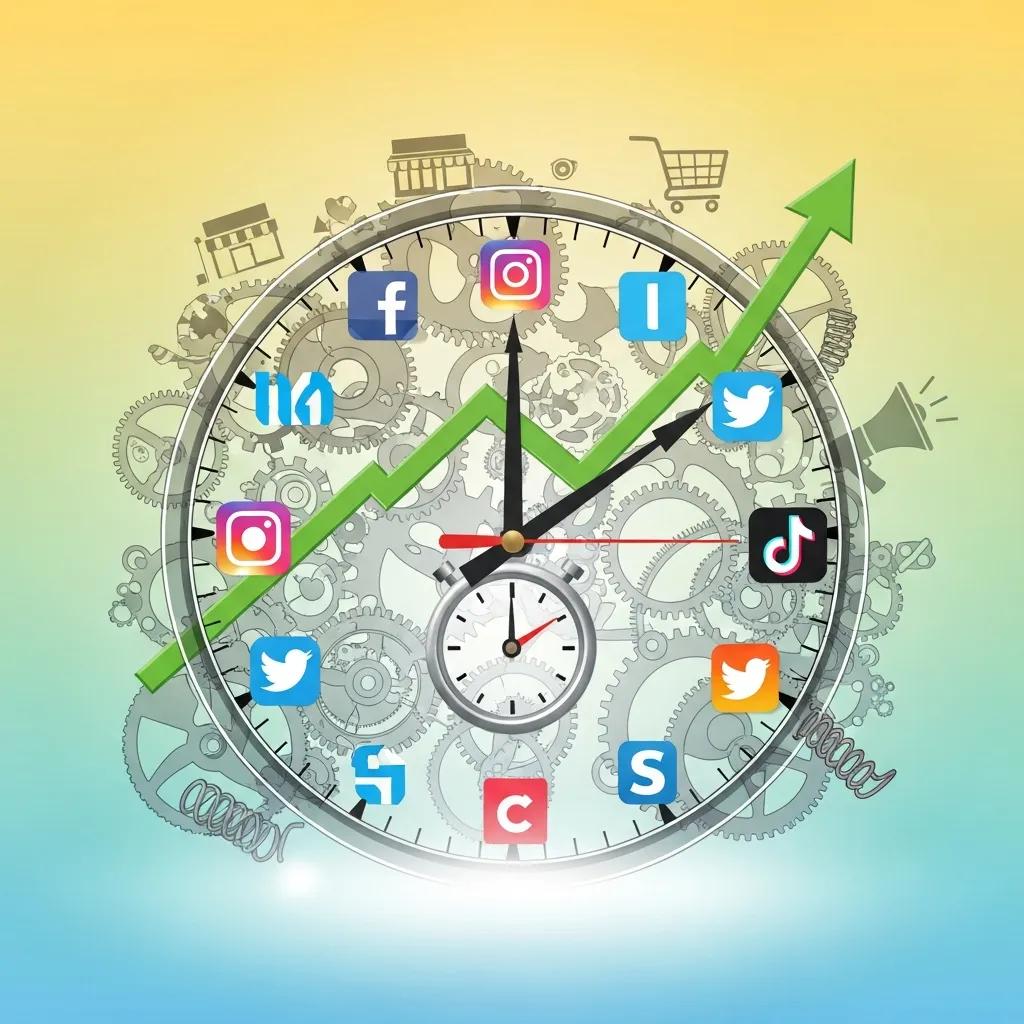
Manual posting, monitoring comments, and replying to direct messages can consume several hours each week for a small business owner; automation targets those predictable tasks so humans handle only high-value interactions. Typical time sinks include crafting daily posts, chasing missed messages, and compiling performance reports—activities that automation cuts by an estimated 50–70% depending on workflow maturity. The mechanism is straightforward: scheduled content eliminates daily posting, auto-responses handle routine questions, and reporting dashboards replace manual tracking, which together free up time for service delivery and strategic planning. Reclaimed hours can translate into extra appointments, better in-store service, or time to develop local partnerships that increase referrals. Measuring time savings requires baseline tracking (hours spent per week on social tasks) and monitoring the drop after automation is implemented, a step that ensures the change reduces burnout rather than just shifting effort.
Reclaiming time through automation also improves decision quality and mental bandwidth. When owners spend less time on repetitive tasks, they can focus on customer experience and revenue-generating activities, which creates a virtuous cycle of better service, repeat business, and less stress. This naturally leads into why consistent presence matters for customer trust and discovery.
What Are the Key Benefits of Consistent Social Media Presence for Local Businesses?
A consistent social presence builds trust, increases local discovery, and nudges repeat visits by staying top-of-mind with neighborhood audiences. Consistency helps algorithmic ranking on platform feeds and signals active engagement to prospective customers, which in turn supports profile views and actions like clicks to call or requests for directions. For local search behavior, social posts that drive traffic to an optimized website or Google Business Profile can increase conversions and appointment bookings. Examples include weekly specials that create walk-in spikes, customer highlight posts that build trust, and event promotions that drive local attendance. Over time, consistent content establishes brand recognition that simplifies conversion: customers who recognize a local name are likelier to choose it over less-visible alternatives.
To capture these benefits reliably, businesses need repeatable content themes and measured cadence. Establishing a content calendar with mixed post types—promotions, educational tips, user-generated content, and local community posts—creates a predictable pipeline of engagement that automation can publish and track. The next section explains how an AI-powered system brings these capabilities together into a cohesive, automated workflow.
How Does Cloud33and3’s AI-Powered System Transform Social Media Management?
Cloud33and3 offers an AI-powered all-in-one system that integrates smart websites, AI agents, automated posting, lead capture, and SEO-focused workflows so local businesses can scale presence without added manual strain. The system automates scheduled posting, captures leads from social traffic into websites and forms, and runs follow-up sequences so fewer leads slip through the cracks. By combining automated social posts with on-site lead capture and follow-up automation, the platform turns engagement into measurable pipeline activity rather than momentary impressions. The result is a repeatable engine: content attracts attention, smart website forms capture intent, and AI agents handle initial contact and booking, producing faster response times and improved conversion. This integrated approach aligns social media automation with local search optimization and reputation management to lift visibility in neighborhood searches.
Below is a compact feature-to-benefit comparison that shows how specific capabilities map to time saved and outcomes.
FeaturePrimary FunctionTypical OutcomeAutomated SchedulingPublish posts at optimal timesSaves several hours/week of manual postingSmart Website Lead CaptureConvert social clicks into contact dataIncreases qualified leads and booking requestsAI Follow-Up AgentsAuto-respond and nurture leadsFaster response times and higher conversionSEO + Reputation ToolsImprove local rankings and reviewsGreater local discoverability and trust
What Is Claudia AI and How Does It Automate Customer Follow-Up?
Claudia AI is an AI agent within Cloud33and3’s ecosystem designed to intercept captured leads and execute follow-up workflows that qualify, schedule, and nurture prospects automatically. Claudia operates on triggers such as form submissions, social DMs, or chat flows, sending tailored messages that confirm interest, ask qualifying questions, and offer appointment options or links to booking pages. This workflow reduces manual follow-up lag, which has a direct impact on conversion because faster responses increase the chance of securing appointments. Integration points typically include smart website forms and scheduling endpoints, allowing Claudia to move a lead from initial contact to booked appointment without human handoff unless required. The automation also logs interactions for reporting and escalates high-value leads for human intervention when needed.
Claudia’s value is clear when viewed as an assistant that handles repetitive outreach while escalating complex requests. This reduces owner workload and ensures consistent, polite, and prompt engagement, thereby improving customer experience and sales outcomes. The next subsection shows how smart websites and SEO amplify those results.
How Does Integration of SEO and Smart Websites Boost Local Visibility?
Smart websites act as the central capture point for social-driven traffic, and when paired with local SEO, they convert visibility into measurable business actions. The mechanism is sequential: automated posts drive profile and site visits, smart websites collect lead data via optimized forms and structured content, and SEO improvements such as localized schema and GBP signals reinforce discoverability in local search. Technical examples include adding structured data to service pages to improve indexing of local services, optimizing landing pages for neighborhood keywords, and ensuring consistent NAP data and review signals align between social profiles and Google Business Profile. This integration increases the odds that social engagement results in searches, clicks, and appointments rather than passive likes.
When social automation feeds a well-optimized website, each post becomes not just content but a conversion opportunity. Proper tracking and attribution then show which social themes drive the best leads, informing content strategy and improving ROI—a feedback loop that keeps improving visibility and conversions.
Which Social Media Platforms and Automation Features Are Best for Small Businesses?
For local businesses, Facebook and Instagram remain primary platforms due to their broad local reach, ad targeting, and features that support bookings and direct interactions. Platform choice should align with customer demographics: Facebook often serves older local audiences and groups, while Instagram is effective for visual businesses and younger local customers. Essential automation features across platforms include scheduled posting, comment moderation, auto-responses (within platform policy), content recycling, and analytics dashboards that tie social metrics to website actions. Businesses should prioritize features that reduce daily manual tasks while preserving the ability to personalize and escalate interactions when needed. Understanding platform constraints—such as DM automation limits and API restrictions—helps craft compliant automation that balances reach and authenticity.
Below is a reference table mapping common platforms to practical automation features and typical use cases.
PlatformAutomation FeatureTypical Use Case / BenefitFacebookScheduled posts, comment moderation, group postingPromote events, manage reviews, engage local groupsInstagramContent scheduling, hashtag suggestions, saved repliesShowcase visual work, run promotions, streamline repliesMessaging AppsQuick replies, chat flows (policy-compliant)Instant lead capture, appointment triageLocal ProfilesReview monitoring, automated review request promptsImprove reputation and local search signals
How to Automate Facebook and Instagram Posting and Engagement?
Automating posting and engagement requires a checklist that preserves personalization while removing repetitive work. Start with a content calendar that allocates themes (offers, education, behind-the-scenes) for predictable cadence, then use scheduling tools to queue posts for peak local times. Set up saved replies and auto-acknowledgements for common DMs and comments, and configure moderation rules to surface high-priority messages for manual handling. Monitor performance weekly and adjust cadence and creative types based on which posts drive clicks to your website or bookings. Finally, maintain escalation rules so that any message mentioning cancellations, refunds, or safety concerns is routed to a human immediately.
Follow this checklist to implement automation:
Create a 4-week content calendar: Define recurring themes and CTAs.
Use scheduling tools: Queue posts for local peak times and reuse high-performing content.
Set saved replies and auto-acknowledgements: Handle FAQs instantly and capture leads.
Configure moderation and escalation: Route sensitive or high-value messages for human follow-up.
Review analytics weekly: Optimize cadence, creative, and CTA focus.
This checklist turns daily busywork into a repeatable system that keeps your profiles active without constant attention. The next H3 explores AI tools that create and schedule content efficiently.
What AI Tools Help Create and Schedule Social Media Content Efficiently?
AI tools accelerate caption creation, suggest hashtags, repurpose long-form content into short social clips, and automate scheduling so teams publish more with less effort. There are three practical classes of AI tools: content generators (create captions and post ideas), creative assistants (repurpose images and video clips), and schedulers (plan and publish across platforms). When vetting tools, prioritize those that maintain brand voice, allow easy editing, and integrate with your lead-capture workflows so content links track back to conversion points. Integration matters: when AI-generated posts include consistent CTAs and UTM parameters that point to smart website forms, the entire automation chain supports measurable lead flow. Selecting tools that fit your size and workflow ensures automation is a productivity multiplier rather than a source of off-brand content.
To maintain quality and control, combine AI-generated drafts with a human review step for brand-sensitive posts and reserve live engagement for high-value interactions. This balance preserves authenticity while leveraging AI scale, which naturally leads to mapping automation to lead generation workflows in the next section.
How Can Social Media Automation Drive Lead Generation and Customer Engagement?
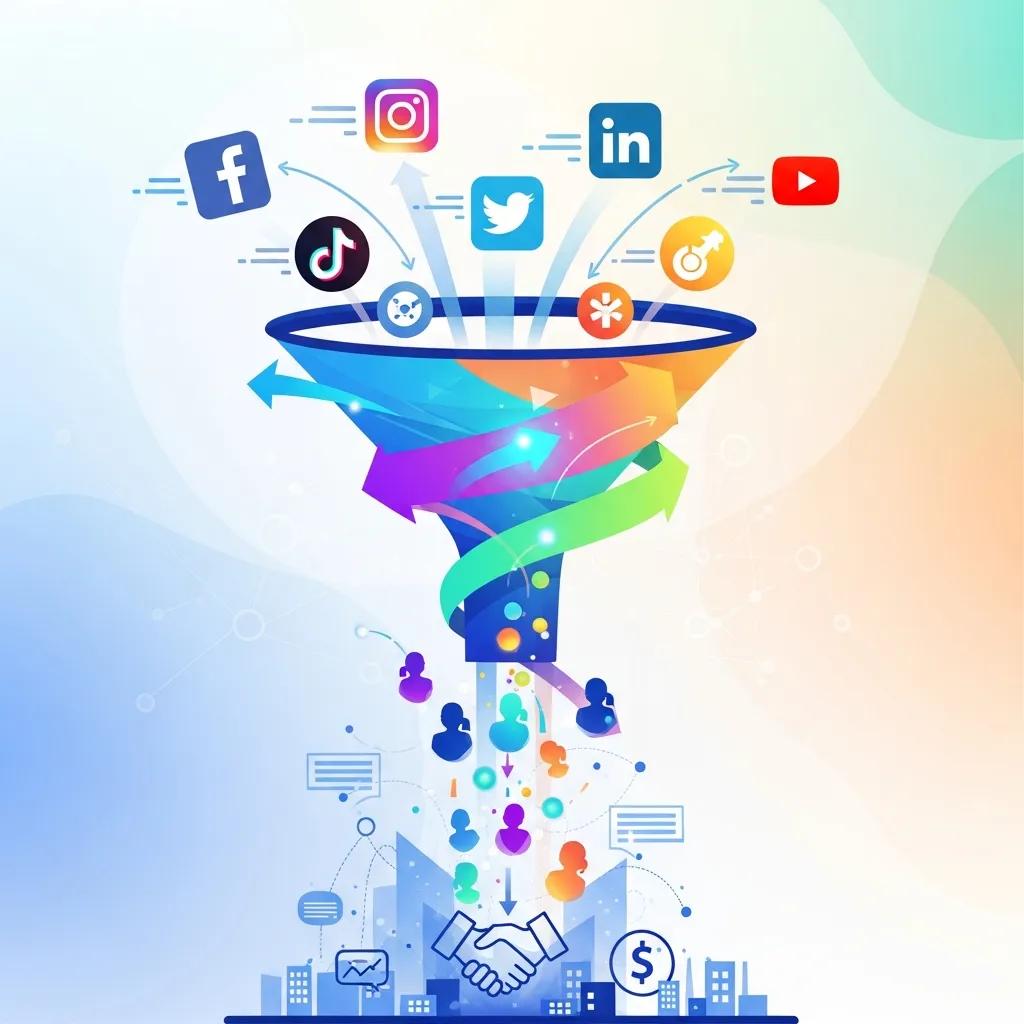
Social media automation transforms engagement into pipeline by linking posts and replies to lead capture mechanisms, nurture flows, and appointment scheduling systems. The process typically follows three stages: attract (targeted posts and local content), capture (forms, chat flows, or direct booking links), and convert (automated follow-up sequences and scheduling). Automation ensures no lead is lost between these stages—scheduled posts attract traffic, smart website forms or chat capture contact data, and AI follow-up agents qualify and book appointments. Measurement is critical: tracking conversion rates from post to lead to booking reveals which content types and channels provide the highest ROI. When organized correctly, automation reduces friction and shortens the lead-to-sale timeline.
Below is an EAV-style mapping of tools to conversion outcomes that shows how specific components contribute to lead generation.
ComponentFunctionConversion / OutcomeSmart Website FormsCapture social traffic leadsIncreases qualified lead capture by reducing frictionScheduling IntegrationEnable instant booking from lead flowShortens time-to-booking, improving conversion rateAI Follow-Up (Claudia)Nurture and qualify automaticallyRaises booking conversion through faster responsesAnalytics & AttributionTrack source-to-conversion pathsIdentifies highest-performing post types and platforms
Connecting these components turns social engagement into a reliable lead pipeline. Next, we outline tactical strategies for automated lead capture from social channels.
What Are Effective Strategies for Automated Lead Capture from Social Media?
Practical lead-capture strategies include using short-form lead magnets, optimized chat flows, appointment booking CTAs, and targeted promotions that require a simple form or DM to redeem. Lead magnets for local businesses might be a neighborhood discount, a downloadable local guide, or a time-limited booking offer that users claim via a form. Chat flows and quick-reply buttons capture intent directly from comments or stories, while UTM-tagged links from posts send visitors to landing pages with minimal friction. Integrating captured leads into a CRM ensures automated nurture sequences can follow up with reminders, confirmations, and upsell offers. Each capture method should require minimal steps to convert—ideally a single tap or a short form—to maximize completion rates.
Here are tactical steps to implement automated capture:
Use a one-field form or quick-reply chat: Reduce friction for mobile users.
Offer local, time-bound incentives: Drive immediate action from nearby audiences.
Integrate captured leads into CRM: Trigger automated nurture and booking flows.
Track source and behavior: Use attribution to refine campaigns and creative.
These tactics convert passive engagement into actionable leads while preserving a quick path to booking. The final H3 explains how automated follow-up improves relationships and sales.
How Does Automated Follow-Up Improve Customer Relationships and Sales?
Automated follow-up improves outcomes primarily by reducing response time and maintaining consistent contact that prevents leads from dropping out of the funnel. Rapid acknowledgement after an inquiry signals professionalism and increases trust, while structured nurture sequences keep prospects engaged until they are ready to book. Personalization within automation—such as inserting service-specific information or referencing the user’s message—elevates automated messages beyond generic replies and improves conversion rates. Measurement shows that faster responses materially increase booking likelihood; automation ensures speed and consistency across all inquiries. Additionally, automated reminders and confirmation messages reduce no-shows and improve customer satisfaction, which leads to better reviews and long-term retention.
By combining speed, personalization, and scheduling integrations, automated follow-up creates a seamless experience that boosts conversion and lifetime value. This operational approach sets the stage for growing without burnout, which the next section addresses.
How Can Local Businesses Grow Without Burnout Using Social Media Automation?
Local businesses grow without burnout by adopting automation for repetitive tasks while preserving scheduled human touchpoints for relationship-critical moments. The strategy blends systems—content calendars, scheduled posting, automated capture, and AI follow-up—with explicit human roles: creative oversight, high-value engagement, and escalation management. Operational changes include batching content creation, setting weekly check-ins to review incoming escalations, and assigning a team member or agency contact to handle complex customer issues. These shifts allow owners to spend time where they deliver unique value: in-person service, community partnerships, and high-impact sales conversations. The net effect is sustainable scaling: more visibility and leads with a predictable, lower-effort operating rhythm.
To make this transition practical, consider these best practices and case-study evidence of outcomes.
What Are Best Practices for Balancing Automation and Personal Engagement?
Balancing automation and personal engagement requires rules of thumb: automate routine queries and scheduling, but schedule regular windows for live interaction and personalization. Use templates and saved replies for common questions, and add short personalization tokens (customer name, service referenced) to automated messages to keep tone authentic. Reserve human intervention for relationship moments, complaint resolution, and upsell conversations where empathy and nuance matter. Operationally, set escalation criteria so that any message containing keywords like "urgent", "refund", or "not satisfied" is flagged for immediate human follow-up. Finally, audit automated content regularly to ensure brand voice stays consistent and to prevent stale or repetitive messaging from eroding trust.
These practices maintain authenticity while capturing the efficiency gains of automation, preparing businesses to scale without increasing owner workload. The final subsection offers practical case snapshots that demonstrate these results with Cloud33and3’s approach.
How Do Case Studies Demonstrate Success with Cloud33and3’s Solutions?
Short case snapshots of local clients show measurable improvements: increased lead capture rates from social posts, reduced owner hours spent on social tasks, and improved local rankings due to coordinated SEO and reputation management. For example, businesses that combined scheduled social campaigns with smart website forms and automated follow-up observed faster initial responses and higher booking conversion rates as automated nurturing reduced lead drop-off. Cloud33and3’s integrated system — combining AI agents, smart websites, and local SEO tactics — consistently produces outcomes that let owners reallocate time to core operations while maintaining or growing customer volume. These results illustrate the central promise: automated workflows drive leads and bookings while minimizing burnout for local teams.
For businesses ready to adopt an all-in-one automation approach, Cloud33and3 provides AI-powered business solutions that automate lead capture, communication, appointment scheduling, and reputation management to help local businesses grow without burnout. To explore specific configurations and tailored workflows, consider reaching out to learn how an integrated system can be customized to your local market and operational needs.
Service Highlight: Cloud33and3 packages combine AI agents like Claudia, smart websites, and local SEO to create an automated lead pipeline.
Outcome Focus: Faster follow-up, more qualified leads from social media, and improved Google ranking signals.
Next Step: Assess current social workflows, define priority automations, and pilot a small scheduled campaign plus an automated follow-up flow.


